How to Recover Deleted Files on Windows 11 – 6 Proven Ways to Recover Data
One day you open your laptop and see all work documents, family photos or crucial data on Windows 11, sounds like a nightmare right? But...
Recover deleted, formatted, corrupted or RAW files from Windows 11, 10, 8 & 7 using forensic-grade, read-only deep scanning.
Built with cybersecurity methodology, RecovByte analyzes MFT fragments, orphaned indexes, RAW signatures and more — without overwriting your disk.
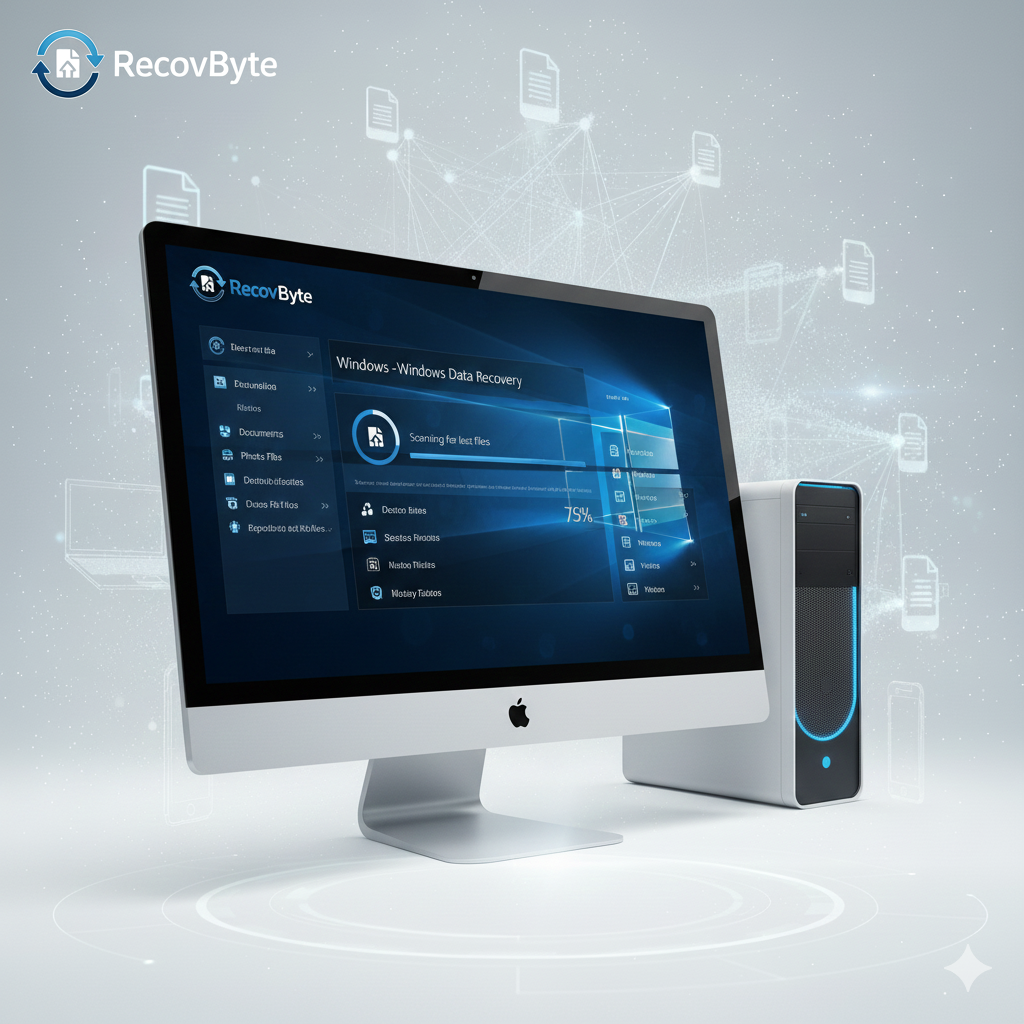
A forensic-grade deep scan report generated using RecovByte Deep Engine.
Performed on a Windows 11 NTFS SSD using our read-only forensic engine.
RecovByte combines a forensic-grade scanning core with a clean, guided interface. Under the hood it speaks the language of NTFS, MFT, partitions and RAW sectors, but on the surface it feels like a simple, safe wizard.
RecovByte analyzes NTFS metadata (MFT, INDX records, bitmap and log file traces) to reconstruct directory trees even when Windows Explorer shows an empty drive. The engine is designed to recognize orphaned file records, fragmented clusters and partially damaged entries, allowing it to rebuild a usable file structure from what looks like chaos to a normal tool.
When the file system itself is no longer trustworthy, RecovByte switches to RAW carving mode. It scans the drive sector-by-sector and uses a large signature database to recognize photos, videos, documents, archives, emails and more — even if the partition table is missing or the volume is marked RAW by Windows.
Lost partitions after reinstalling Windows or changing disk layout? RecovByte can detect previous partition structures by analyzing residual signatures and boot records. It then reassembles what used to be on those partitions into a browsable recovery map, so you can select the right volume to restore from.
Before committing to recovery, you can preview photos, Office documents, PDFs, videos and other file types directly inside RecovByte. This prevents restoring irrelevant or broken files and helps you focus on the most important items first — critical for incident response and professional data recovery cases.
Every operation performed by RecovByte against the source drive is strictly read-only. No repair attempts, no background writes, no automatic “optimization.” This is the same philosophy used in digital forensics: preserve the evidence, never modify the original. All recovered data is written only to a secondary, healthy destination of your choice.
Modern systems run on high-speed NVMe SSDs and GPT-partitioned disks. RecovByte’s engine is optimized for these environments, reducing scan time and improving stability when dealing with large-capacity, multi-terabyte drives commonly used with Windows 11 and Windows 10.
RecovByte is built around the situations Windows users and IT teams run into every day — accidental deletion, formatting the wrong disk, sudden OS crash, or a drive that suddenly appears as RAW or 0 bytes.
If files were removed from the Recycle Bin or deleted with Shift+Delete, they no longer appear in Windows — but their data is often still on the disk. RecovByte scans the underlying file system for deleted entries, cross-references them with free space maps, and recovers what hasn’t been overwritten yet, including filenames and original folder locations where possible.
A quick format or even a full format does not always destroy all data immediately. RecovByte looks beyond the new file system metadata and recovers content from previous structures and RAW sectors. This includes internal system drives, external USB HDDs, and SSDs that were formatted by mistake during reinstall or setup.
When Windows reports “You need to format the disk before you can use it”, it usually means the file system header is damaged. RecovByte bypasses the standard Windows mount routines and reads data directly at sector level, so you can extract files even when the OS thinks the volume is unusable or 0 bytes in size.
Logical corruption, bad sectors, or unstable controllers can cause freezes and hangs when you try to browse the drive. RecovByte is engineered to handle such conditions more gracefully than normal copy operations, by using controlled read patterns and recovery-friendly workflows that minimize further stress on the device.
Malware often hides, renames, or deletes user data. While it cannot decrypt strong ransomware, RecovByte helps restore files that were deleted or removed as part of an infection. For accidental deletion and misconfigured cleanup utilities, the deep scan engine is particularly effective at locating recently lost content.
If Windows refuses to boot after an update, blue screen, or system error, you can remove the drive and connect it as a secondary disk to another machine. RecovByte can then scan the offline Windows volume and recover user profiles, desktop data, documents, project folders and more, without needing the original OS to start.
RecovByte does not “fix” drives by writing to them. Instead, it works around Windows-level errors and gives you a safe way to read and copy data off the affected disk before you run any risky repair tools.
One of the most frightening Windows prompts. RecovByte allows you to ignore the format suggestion and instead analyze the disk in a controlled environment. You can attempt deep recovery first, and only consider formatting the drive after all recoverable data has been safely exported elsewhere.
When a volume appears as RAW or 0 bytes capacity, typical tools fail to recognize any file system. RecovByte reads the disk as a raw data source, repairing the logical view in memory so you can browse and copy files that still exist, without relying on Windows to interpret the file system correctly.
Permission issues, partially broken ACLs or security products can cause access-denied errors for certain drives. By scanning at a low level, RecovByte can often read sectors even when normal file browsing fails, giving you a way to regain access to your important files without editing permissions on a failing disk.
If a previously working partition no longer has a letter in Disk Management, or large sections of the drive appear as “unallocated”, RecovByte’s partition discovery routines can still analyze these regions for recoverable structures and content, helping you restore files before attempting any partition repair or re-creation.
Corrupted partition tables and conflicting MBR/GPT information can make an entire drive appear empty. Rather than rewriting the partition table blindly, RecovByte inspects the existing sectors to detect old partition signatures and file system boundaries, then presents you with recoverable volumes in a non-destructive way.
Abrupt shutdowns, cable pulls and system freezes in the middle of file transfers can lead to partially written data. RecovByte helps you identify which files are still intact and which are corrupted, and focuses on salvaging as much consistent data as possible from before the failure.
Whether you are recovering from a laptop SSD, a desktop workstation, a USB stick or an SD card, RecovByte is designed to work across the devices that real Windows users rely on every day.
Recover data from classic spinning hard drives, hybrid drives and modern SSDs. Ideal for Windows system disks, secondary data volumes, gaming drives and project drives used for work or study.
Supports external USB HDDs, portable SSDs and high-capacity USB flash drives commonly used for backups, media libraries and file transfers between systems. Perfect when “just a backup drive” suddenly shows errors.
Recover deleted or lost photos and videos from SD and microSD cards used in DSLR cameras, drones, action cams and handheld devices that are later connected to Windows for offloading media.
As long as Windows sees the RAID as a logical volume, RecovByte can scan it. This includes many NAS exports, USB enclosures, and software RAID setups that appear as standard drives to the OS.
Supports NTFS, FAT32, exFAT, ReFS and RAW/unallocated spaces typically found on Windows. RecovByte adapts its strategy depending on whether the file system metadata is intact, partially damaged or missing.
Documents (DOCX, XLSX, PPTX, PDF), images (JPG, PNG, RAW), videos (MP4, MOV, AVI), archives (ZIP, RAR), email containers, databases and many application-specific data formats are all within the recovery scope.
The workflow is intentionally simple, but each stage is backed by forensic logic and safety checks designed to protect your data and guide non-technical users through serious recovery cases.
Start by choosing the internal or external storage device that contains your lost files. RecovByte performs an initial, read-only inspection to identify the file system type, capacity, health signals and any obvious structural issues such as RAW state or missing partitions.
If you recently deleted files and the drive is otherwise healthy, Quick Scan is often sufficient and much faster. For formatted, corrupted or RAW volumes, Deep Scan activates the full forensic engine, scanning every accessible sector to find and reconstruct any recoverable data.
After scanning, you receive a detailed summary: files located, recoverable items, partitions detected, file systems found, and overall risk level. At the same time, RecovByte builds a browsable tree view so you can filter by folders, file types or search by name.
For important documents, photos, or business files, you can preview them inside the application. This lets you confirm whether the recovered version is intact and worth restoring, saving time and storage space, while improving your confidence in the final result.
Finally, you choose a different, healthy drive or external device as the destination. RecovByte copies the selected files there without modifying the original source, allowing you to secure your data first and decide on disk repairs or formatting later, with less pressure and more control.
There are many tools that claim to recover deleted files. RecovByte is engineered with a forensic mindset, which directly impacts what it can recover and how safely it works.
| Capability | RecovByte | Typical Tools |
|---|---|---|
| Deep NTFS Metadata Reconstruction | Yes – MFT & INDX level | Limited to directory listings |
| RAW / 0-Bytes Drive Recovery | Full sector-based carving | Often fails or shows nothing |
| Windows 11 & NVMe Optimization | Engine tuned for SSD & GPT | Designed for legacy HDDs |
| Read-Only Safety Engine | Strict read-only access | May write temp data to source |
| File Preview (Documents, Photos, Video) | Yes – wide format support | Limited or none |
| Technical Scan Summary Report | Detailed and exportable | Basic or missing |
| Guided Workflow for Non-Experts | Step-by-step recovery wizard | Complex or confusing UI |
Still unsure whether RecovByte is the right Windows data recovery software for your case? These answers cover the most common questions from both home users and technical professionals.
Yes. When you empty the Recycle Bin, Windows removes the references to those files, but the underlying data can still exist on the disk until it is overwritten by new data. RecovByte scans the file system and RAW sectors looking for those remnants, and if the clusters haven’t been reused, it can reconstruct your files, including many original names and folder paths.
RecovByte itself is read-only and does not write anything to the source drive, which is a critical safety requirement. However, if you hear clicking, grinding, or repeated spin-up noises from a hard drive, the disk might be physically failing. In such cases, the safest strategy is to clone the drive to another disk or image file first and then run RecovByte on the clone to avoid putting additional stress on the original hardware.
No. RecovByte is designed so that non-technical Windows users can follow a straightforward sequence: select drive, scan, preview, recover. At the same time, more technical users have access to detailed scan information, file system metadata and reports that help with documentation and incident response workflows.
You should always save recovered data to a different, healthy drive or an external storage device. Writing recovered files back to the same failing or corrupted drive can overwrite sectors that may still contain unrecovered data, reducing your chances of a successful second attempt or advanced lab recovery later.
If you have the correct decryption key or the drive is unlocked in Windows, RecovByte can scan the decrypted volume. It does not attempt to bypass or break encryption — instead, it operates once Windows has provided access to the unlocked volume, treating it like any other NTFS or supported file system.
Whether you are dealing with accidental deletion, a formatted drive, a RAW volume or a non-bootable Windows installation, RecovByte gives you a methodical, read-only way to inspect the damage and bring back what matters. Start with a free scan, review what can be recovered, and proceed when you are confident in the results.
Download RecovByte for WindowsOne day you open your laptop and see all work documents, family photos or crucial data on Windows 11, sounds like a nightmare right? But...
Data is the backbone of both personal and business life in today’s digital era. Losing important files—whether...

RecovByte is a powerful data recovery software designed to help individuals and businesses restore lost files quickly and safely. Compatible with Windows PCs, laptops, Android devices, and external storage, RecovByte ensures your documents, photos, videos, and system files are recovered efficiently and securely, giving you peace of mind in a digital world.
Copyright © 2025 RecovByte. All rights reserved.